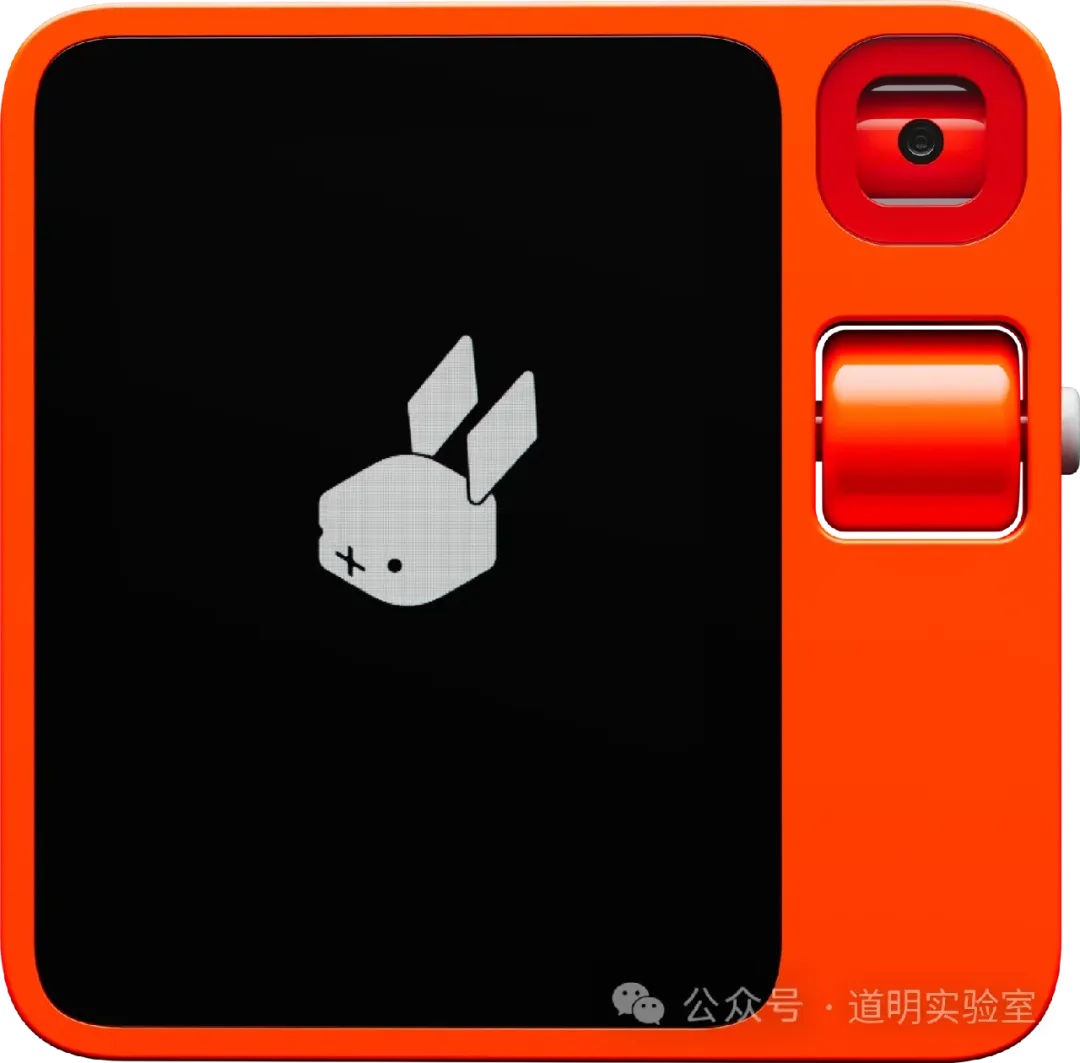
I was originally writing down my thoughts on CES 2024, but a product suddenly jumped onto my screen: the Rabbit R1.
Just by looking at it, I had a hunch: this might be the possible form of AI hardware we've been discussing throughout 2023.
You can think of it as a phone, as it supports a 4G SIM card, or you can see it as a large-model-based box equipped with browsing, interaction, and camera capabilities.
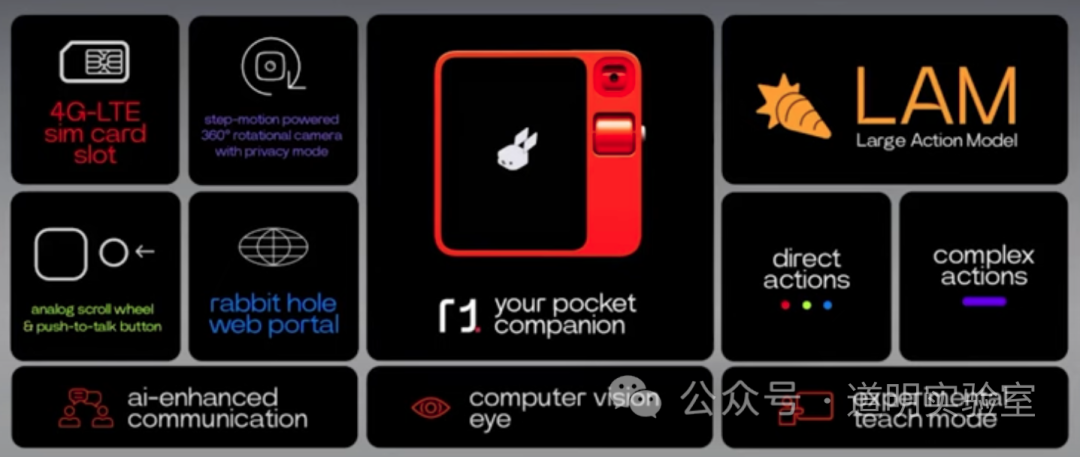
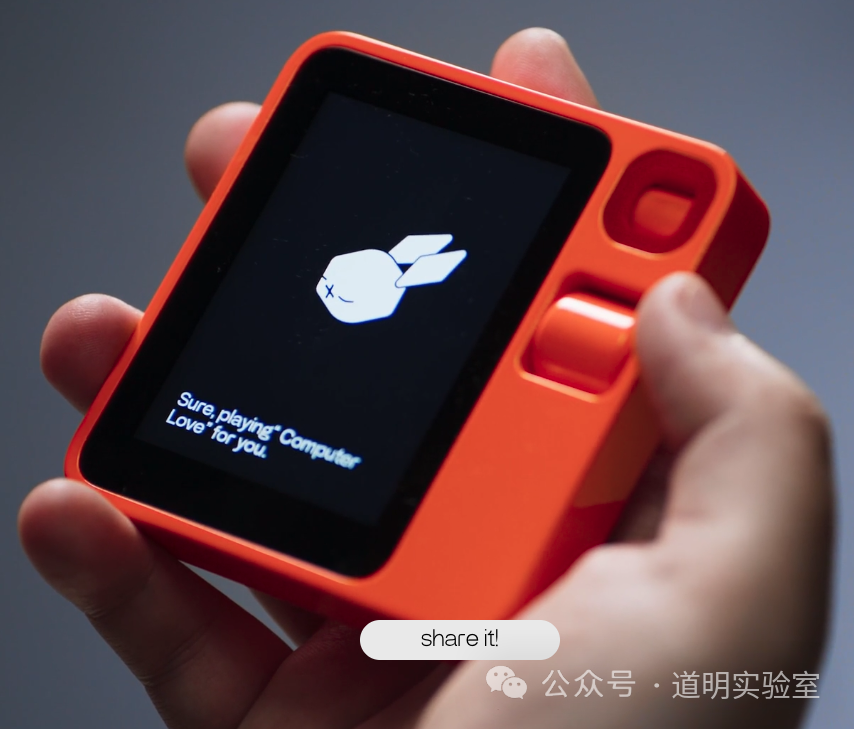
This product was just released by a startup called rabbit. It is based on what they call the Large Action Model (LAM). Through a portal called the "rabbit hole," users can configure various functions. For example, playing music via Spotify:
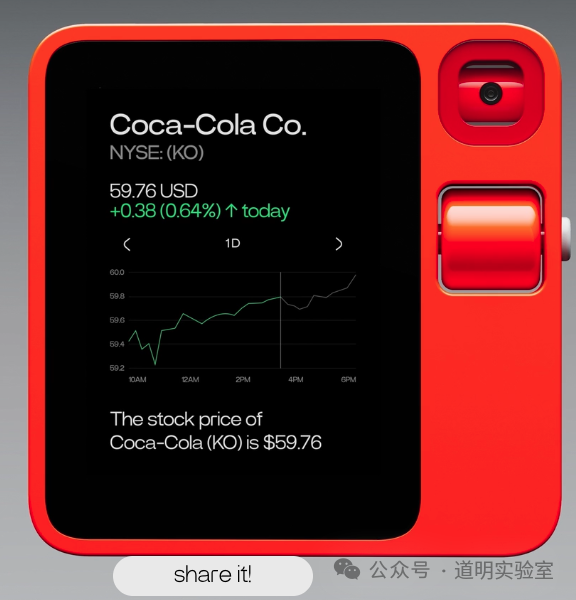
Or checking market quotes:
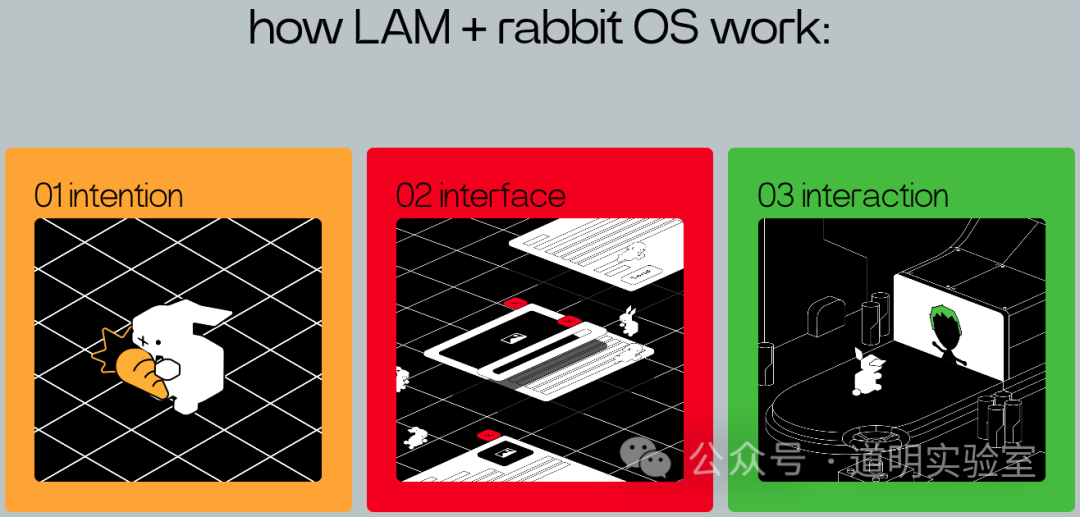
I have always believed that when AI enters hardware, the shift in interaction methods necessitates a completely new operating system.
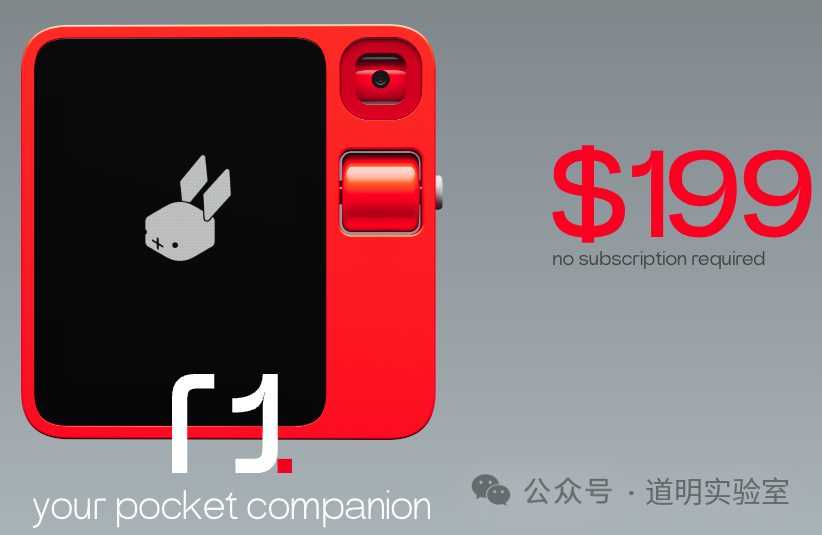
If it were just these features, I'd think it's decent—at $199, it's affordable, compact, stylish, and offers a new way to interact. It's a great toy. If it could integrate social media functions, it could potentially replace a phone entirely.
However, it clearly offers much more, thanks to a brand-new feature called "teach mode." I have envisioned this kind of functionality many times and even experimented with it on desktop systems, but seeing it brought to such a compact device in the demo video still made me go "wow."
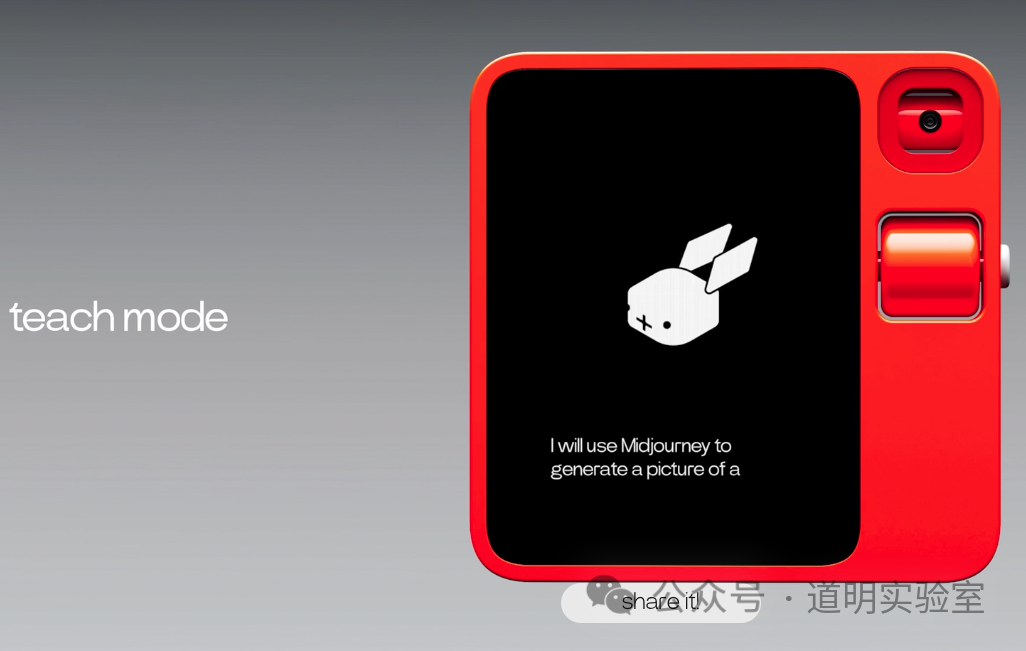
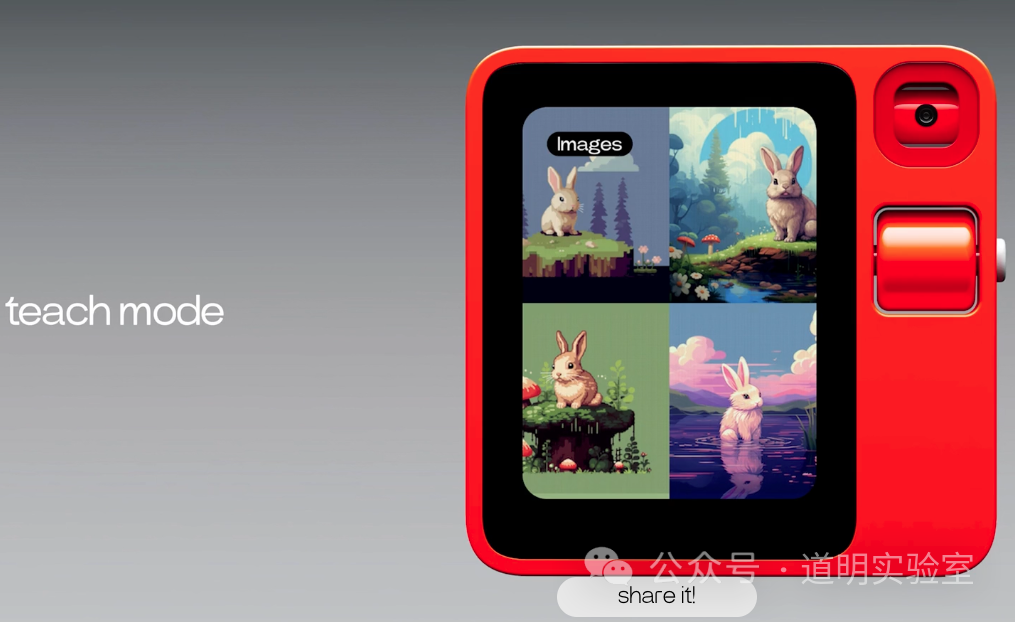
This feature was demonstrated for over three minutes in the official introduction video; those interested can watch it at rabbit.tech.
To describe it simply: we can perform the entire process of generating an image via Midjourney on a computer once, then save and submit it. After that, we can use Midjourney for text-to-image generation using only this R1 device, without needing a computer.
Is it like a "macro" in Office? It’s clearly much more powerful than a macro because, backed by large models, it generates an intelligent template rather than a fixed, mechanical set of actions.
I can think of so many applications: replying to emails, playing games, archiving knowledge bases. If you can truly "teach it once" and let this little "toy" handle the rest automatically, we would truly have more time to reconnect with nature.
Obviously, the first-generation product will have its flaws, but seeing such a highly polished vision of the "future" at the very start of 2024—new AI hardware that could potentially disrupt phones and PCs—is still incredibly exciting.
The year 2024 for AI integrated with hardware has just begun, and the excitement is only getting started.