
While setting up some new environments, I also subscribed to Copilot Pro.
Yes, it meets all previous expectations: the long-familiar chat interface...
It also has mature features like document-based Q&A. However, compared to Claude 3 and Gemini, which I've grown accustomed to, Copilot's current performance is subpar.

It can generate PPTs—a feature that was highly needed this time last year. Now, it feels too simplistic.
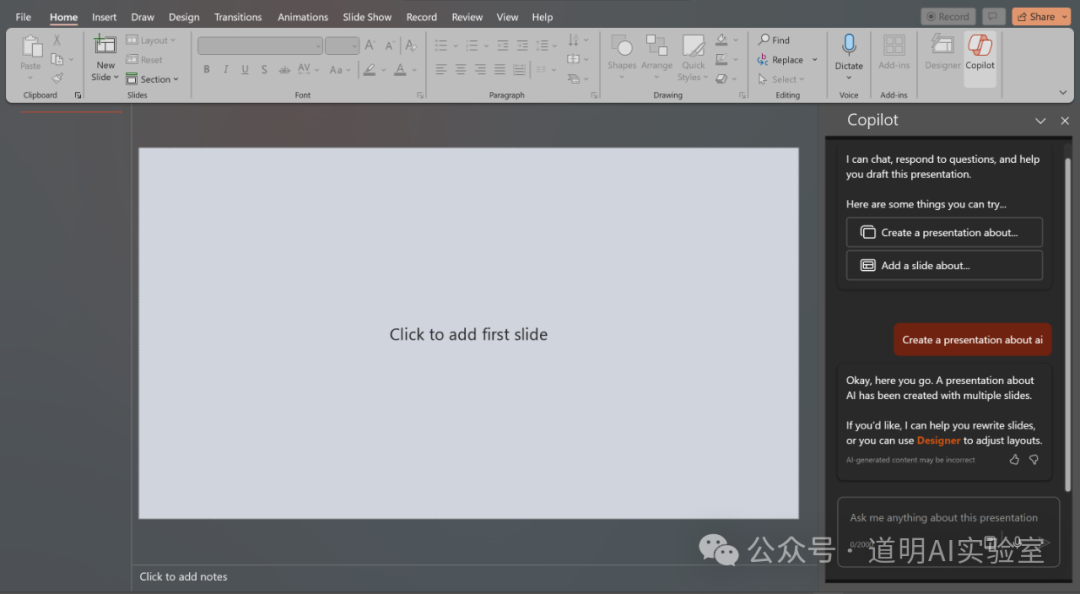
The problem isn't the PPT generation capability itself; it's that over the past year, my usage and requirements for PPTs have changed drastically. Copilot is oriented toward past workflows, while the workflows of potential users have already shifted.

Yes, AI generation can still significantly improve efficiency. However, in the less than one year between Microsoft's announcement of Copilot features and their availability to consumer users, generative AI has advanced by at least a generation, and its functionality has expanded immensely.
Perhaps equally awkward is the "AI Pin" reviews coming out recently: as stunning as it was when announced six months ago, it is just as disappointing now.
So, where is the problem?
The ultimate goal of generative AI is to go directly from Task A to Result B without intermediate processes. This poses a direct challenge to the R&D process of new products. Users need immediate results upon release and no longer have the patience for the long "hype and lead-generation" processes that were popular in the mobile internet era. However, manufacturers' processes are still stuck in the previous era, whether due to risk considerations or practical engineering implementation issues;
Models are constantly evolving, yet models do not appear to have the same massive potential user base as mobile apps. This perhaps leads potential users to clearly feel a sense of "outdatedness" caused by the time lag between "announcement" and "delivery";
Specifically regarding Copilot, in just one year, our needs seem to have shifted from Copilot to expectations for AI Agents. Objectively speaking, the value of the model is depreciating at an extremely fast rate;
We can still remain optimistic about the continued evolution of model capabilities. Finding scenarios and landing them as quickly as possible—low-cost, rapid trial and error—might be much more important than lengthy product validation and R&D processes;
At least for a while, models and products need to continuously drive people to become "faster, higher, and stronger," and provide greater space for creativity and imagination.