Spent a full day and finally, with the help of Codex, basically implemented a one-click daily report video generation workflow based on "Remotion + Gemini." Here is an example: Of course, due to Gemini API Rate Limit issues, there are some missing audio and content segments.
The reasons for choosing Codex were: 1. Claude Code couldn't handle this task because it required a bit too much "imagination"; 2. OpenAI just happened to update the gpt-5-codex model, so I wanted to see how it performed.
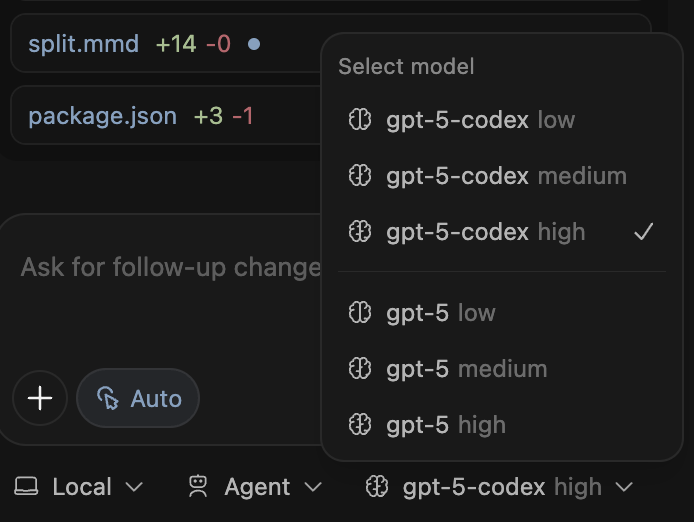
The result was that with "high" mode enabled throughout, everything went smoothly. The code success rate was very high, and the errors that did occur mostly came from external calls, such as permissions during screenshots or Gemini API errors—especially its understanding of tools like Remotion (Claude Code failed because, while provided with full documentation, its technical usage was correct but its architectural approach was flawed).
Of course, by comparison, when "high" mode wasn't turned on, the error rate was slightly higher. Computing power is still king.
Although I have canceled my Cursor subscription, I have grown accustomed to the Cursor IDE over a long time; it's derived from VS Code but is much cleaner and smoother. Since Codex can run as a plugin within Cursor, using it feels no different from Cursor's native mode.
The IDE is shown below: it exposes some local file directory structures, but there's no need to "censor" them. Anyone who can find valuable information there is likely a "kindred spirit."
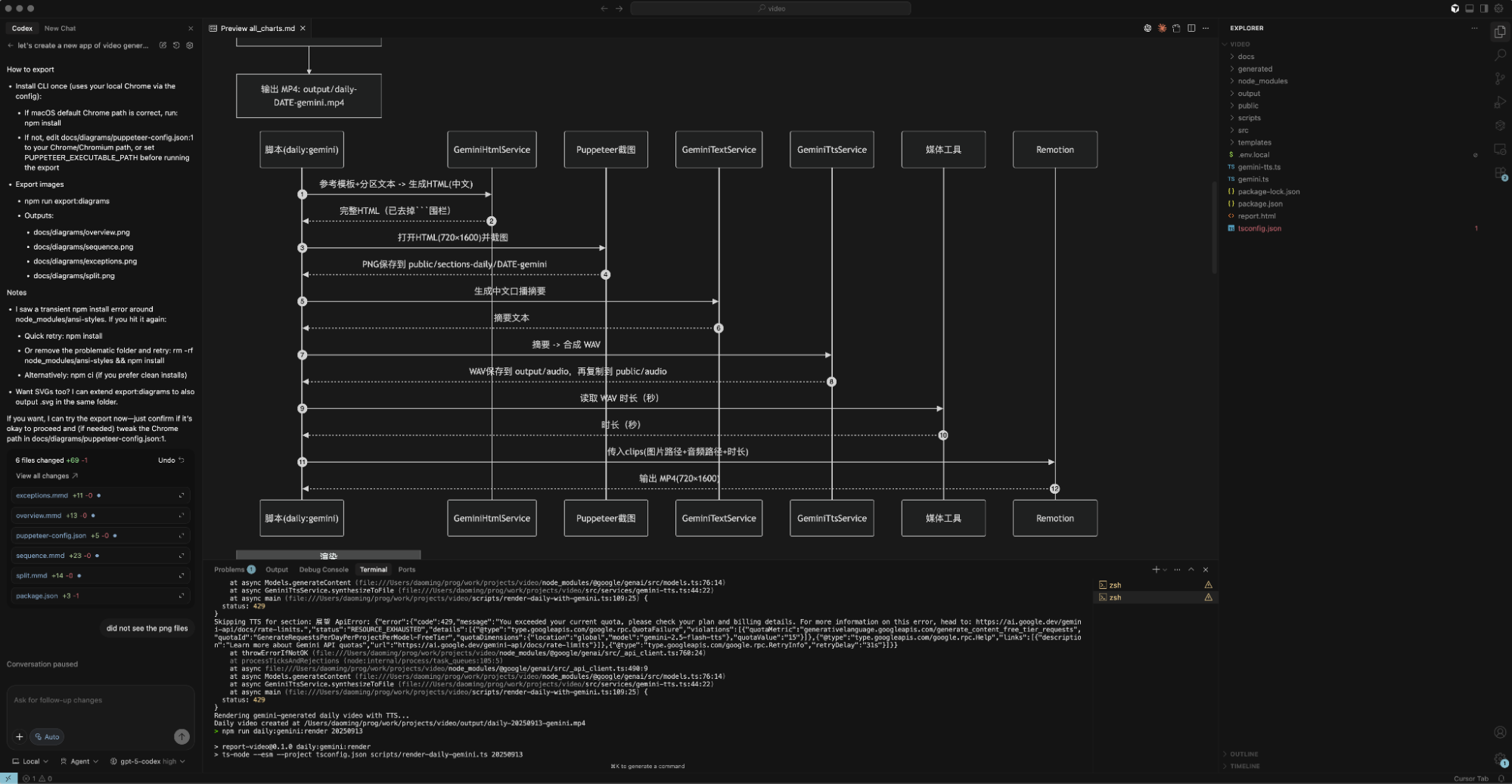
Using Codex is a completely different experience from Claude Code. Simply put, Claude Code is a code "completer," but the current version of Codex is more like a super assistant:
- It continuously communicates with the user about implementation plans during the process to choose the most appropriate one;
- Its "knowledge" regarding external third-party libraries is clearly more extensive, and its usage methods are more reasonable;
- It has higher accuracy in certain execution steps, such as the precision of screenshots;
- Although Codex runs within the project, its perspective is not limited solely to the project itself; much of the communication and confirmation with the user involves content outside the project code that is nevertheless very important.
I pasted all the conversation content into GPT-5 and generated the following analysis to share with friends who want to look into the details.
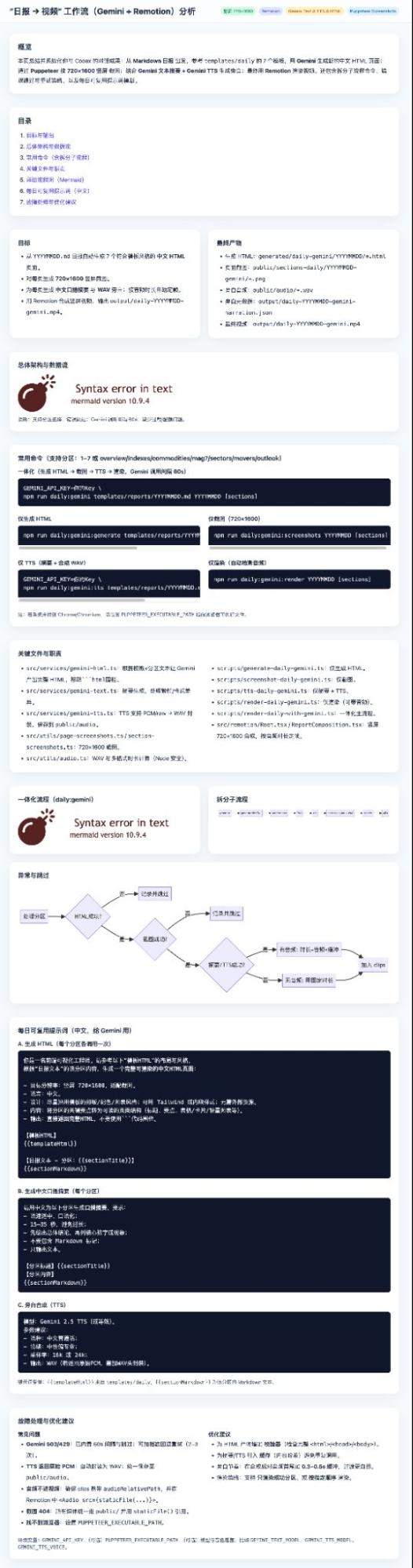
Consequently, it can finally generate video report content like the one at the beginning of this article.
Of course, this process further demonstrates Codex's positioning as a super assistant: through step-by-step communication and refinement, it helped me automate the entire process for one-click output. However, regarding page design, content generation, images, and voice, it relies on a series of external models and tools:
The original report content was generated using the "Agent" mode in ChatGPT;

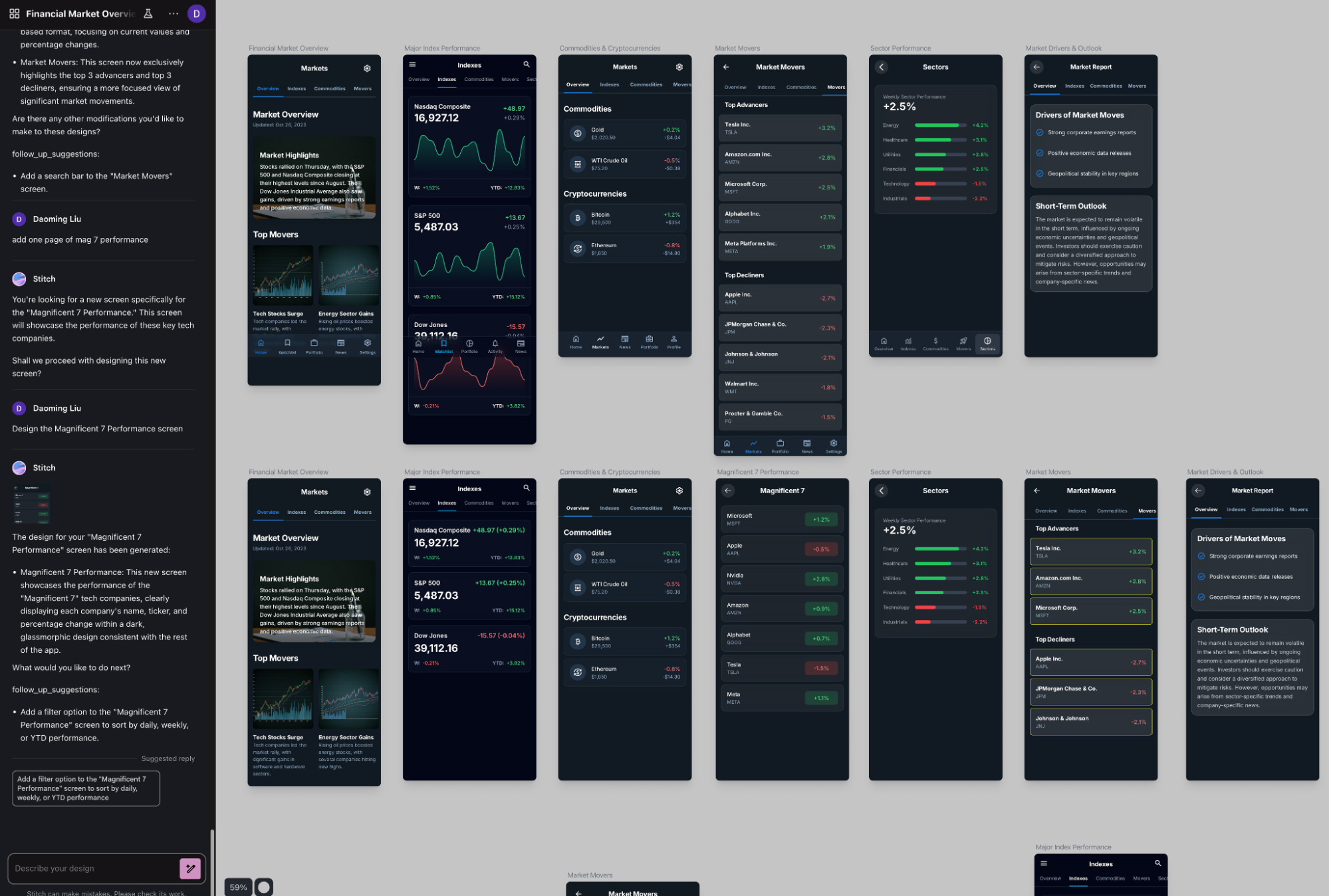
All page designs were completed in Stitch, a design tool based on Gemini:
The script and TTS (text-to-speech) are powered by Gemini-2.5;
Video generation and rendering are handled by Remotion;
And of course, it also depends on my long-standing "business flaws" of being "unprofessional," "constantly distracted," and "never satisfied."