A few days ago, the Washington Post published a feature article suggesting that AI can only complete a very small fraction of human work.
https://www.washingtonpost.com/technology/interactive/2026/ai-jobs-automation/
While I agree with the conclusion to some extent, I strongly disagree with the methodology they used.
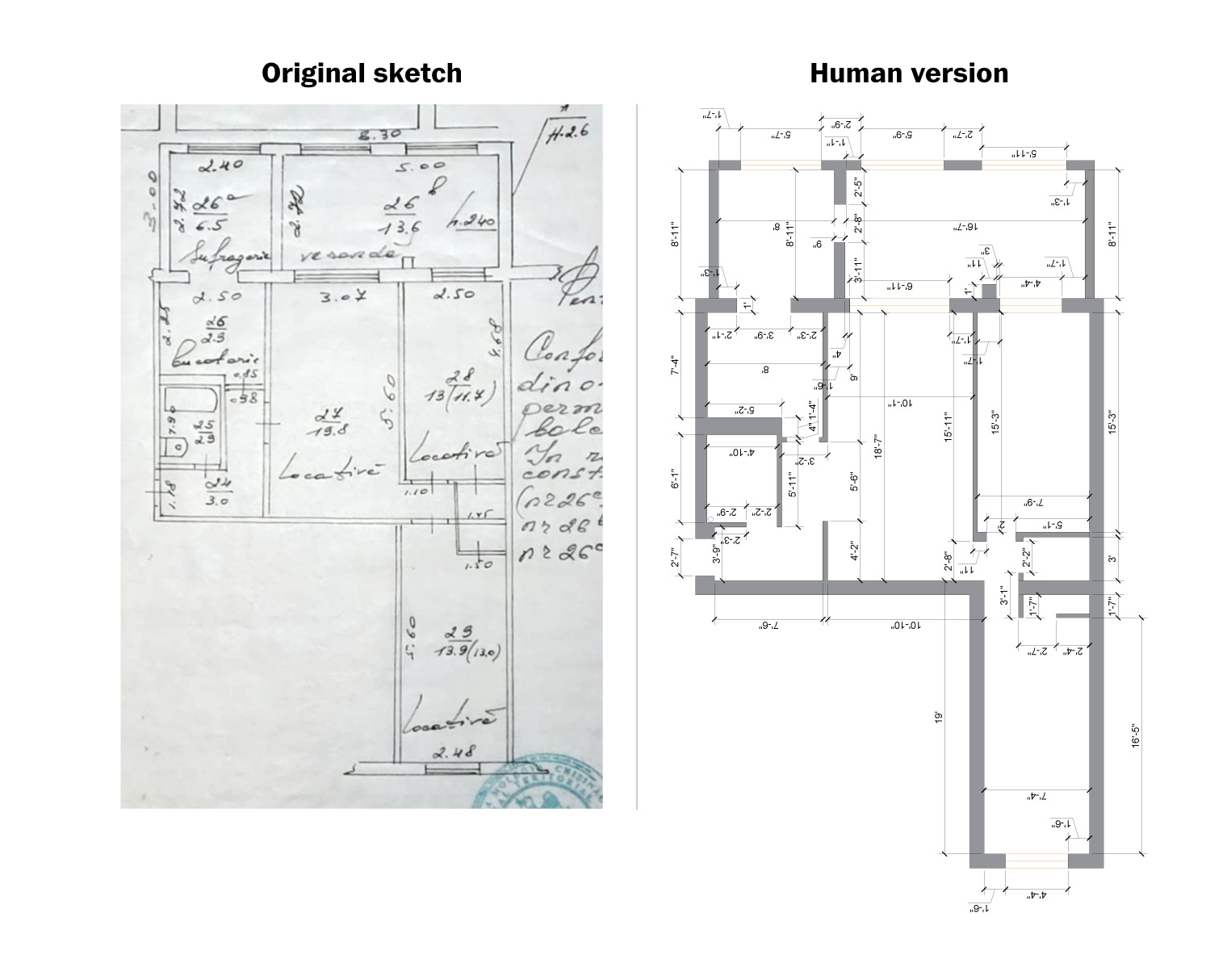
For example, regarding interior design, they took a very scribbled, hand-drawn floor plan and compared the AI-generated version with a human-designed one. Their conclusion: there is a huge gap.
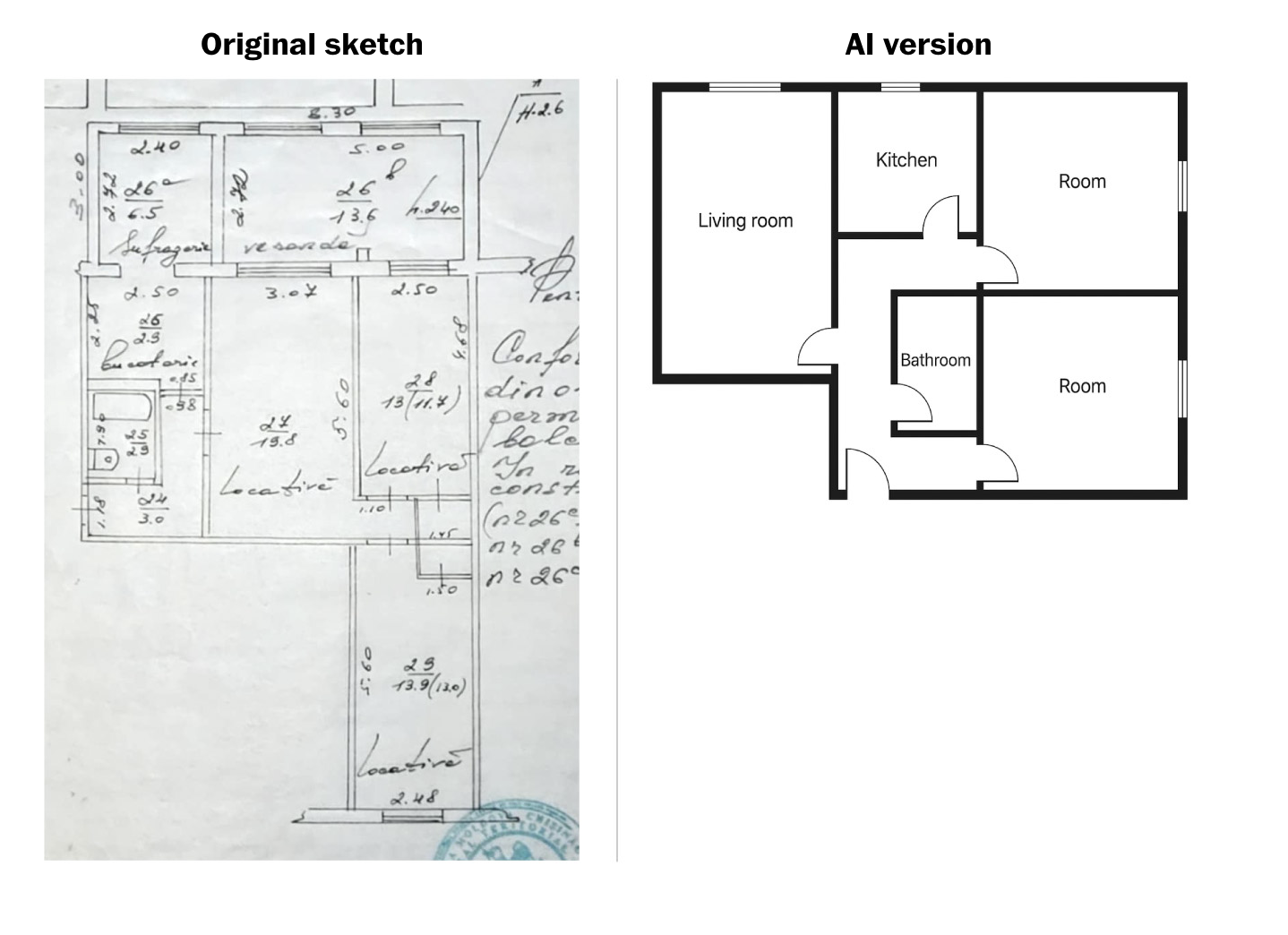
Supposedly, this was the result of using ChatGPT. However, I believe it's simply a case of poorly written prompts.
If you want to test a model's true potential, you should go to the extreme: build an app with pre-configured workflows and prompts, and then call the model within the app to process the floor plan.
So, I used AI Studio's Build (powered by Gemini) to create a simple app. It allows you to upload a floor plan, identify different areas and dimensions, and even generate designs for specific zones.
Using the same scribbled hand-drawn version provided by the Washington Post, the results were as follows:
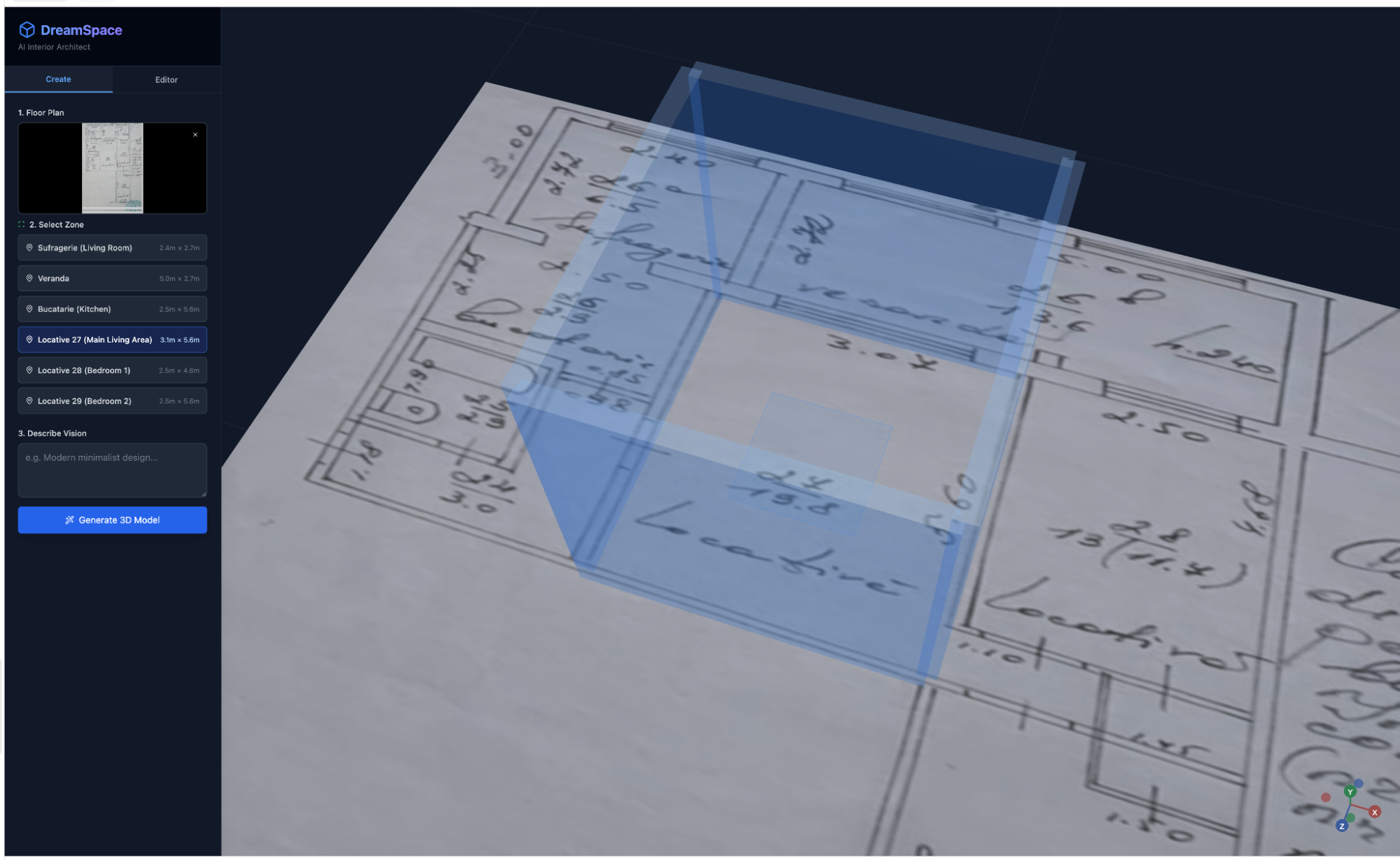
Functional recognition for different areas is already present, and the dimensions for each area are largely accurate. Clicking on any zone provides accurate 3D identification.
Yes, there is still a gap compared to a human designer, but the model's capability is certainly not as "unusable" as the Washington Post claims.
Simply put, they are using it the wrong way. To be a bit hyperbolic, if we must talk about AGI, current models—when paired with human cooperation—barely qualify already.
The same model in different hands can yield vastly different quality results across various fields. Isn't that AGI? Although I have reflected on and criticized the relationship between humans and AI in my recent articles (call it idle speculation), I am convinced that humans currently utilize less than 5% of a model's potential.
This doesn't change the fact that humans remain humans and AI remains AI. However, for a serious media outlet to use an unprofessional demonstration to support a conclusion is not serious at all.
Of course, many might defend their conclusion by saying we should test AI capabilities using the simplest possible methods.
True, just as ten years ago we could have compared smartphones and feature phones solely on call quality and battery life.
In fact, beyond this simple demonstration, AI possesses immense capability and potential in many fields waiting to be discovered. Applications will undoubtedly explode.
For a long time now, I have demonstrated AI's capabilities in market research, image processing, and design.
During my time in China at the end of last year, I accompanied family members to various outpatient clinics four or five times. I felt strongly that this entire process could be replaced by AI: 1. Describing symptoms; 2. Lab tests and X-rays; 3. Report interpretation; 4. Prescribing medicine. I even felt deep sympathy for the doctors. They are forced to perform standardized, rapid, and emotionless consultations, seeing nearly ten patients or more in an hour. I even suspected that under current technology, the "30 to 60-minute wait for lab results" exists solely for crowd control. AI could significantly alleviate their work pressure.
There are many, many other fields where the current market provides ample room for imagination.
However, technical evolution is one thing; societal acceptance follows a different logic.
With high-quality underlying data and process control, AI's ability to write consulting reports and conduct investment research already exceeds 70-80% of human analysts. Yet, no one can accept a situation where, if a risk occurs, the model is the only thing to blame.
The design field is similar to consulting. A significant reason clients are willing to pay is not just for cold evidence, but because they are buying the time of "human analysts" and "human designers."
In my observations at the clinics, perhaps over 90% of patients wouldn't know how to use AI, let alone trust its results. To them, the "sense of authority" a doctor provides likely won't disappear in the foreseeable future.
...
We may not be prepared for the full arrival of AI at all, because the change is too fast for humans to adapt. But is it possible that AI didn't arrive to replace us, but to create?
In early 2023, I was once anxious. Even when holding my camera, I didn't know what to shoot. When I wanted a photo with "content," I knew AI could achieve it—if not now, then soon.
But today, I suddenly find myself deeply enjoying the process of photography again. Our world exists for real; every corner, every minute, and every second of this world is unique and beautiful.
The abundance of AI generation hasn't stopped me from taking more photos (I'm back to thousands a month). Looking at photos gives me more inspiration and ideas within that digital world devoid of time and space.
Every one of us can find a world that belongs to us.